There are truths that no election creates, no legislature repeals, and no change in fashion makes obsolete. A serious political journal must begin by admitting this, because much of modern politics begins by pretending otherwise.
The Modern Inquisition is Canadian in origin, North American in scope, and formed by the Catholic intellectual tradition. It will write about politics, institutions, culture, place, and the moral claims hidden beneath ordinary public language. Its purpose is not to add another voice to the daily noise. It is to expose the premises the noise is designed to conceal.
Charity toward persons does not require mercy toward a lie.
The age has mastered the art of surrender by euphemism. Cowardice is renamed sensitivity. Appetite is renamed identity. The abandonment of duty is renamed liberation. None of this relieves a writer of the obligation to be accurate, fair, and precise. It makes those obligations more severe. A false charge remains false even when made against a false creed.
Firmness is not cruelty
Catholic charity commands love of neighbour. It does not command vagueness about good and evil. Indeed, a refusal to name what harms the human person can become its own form of contempt. This journal will defend Catholic dogma without apology, but it will not use dogma as a licence for lazy argument, personal malice, or factual carelessness.
Its ruthlessness will therefore be editorial: toward cant, bad reasoning, fashionable cowardice, and its own temptations to vanity. Persons will be described justly. Arguments will be shown no indulgence they have not earned.
Radical without violence
Radical means going to the root. It does not mean romanticising chaos, cultivating political hatred, or treating violence as a sacrament. The political and religious renewal argued for here will be pursued by persuasion, conversion, lawful action, durable institutions, disciplined communities, and public witness. It rejects terrorism, intimidation, and the fantasy that bloodshed can substitute for moral authority.
Nonviolence is not passivity. Peace does not require consent to every injustice, nor does civility require the vocabulary of surrender. The journal will advocate changes as fundamental as truth demands, while refusing methods that deny the dignity it claims to defend.
Begin under authority
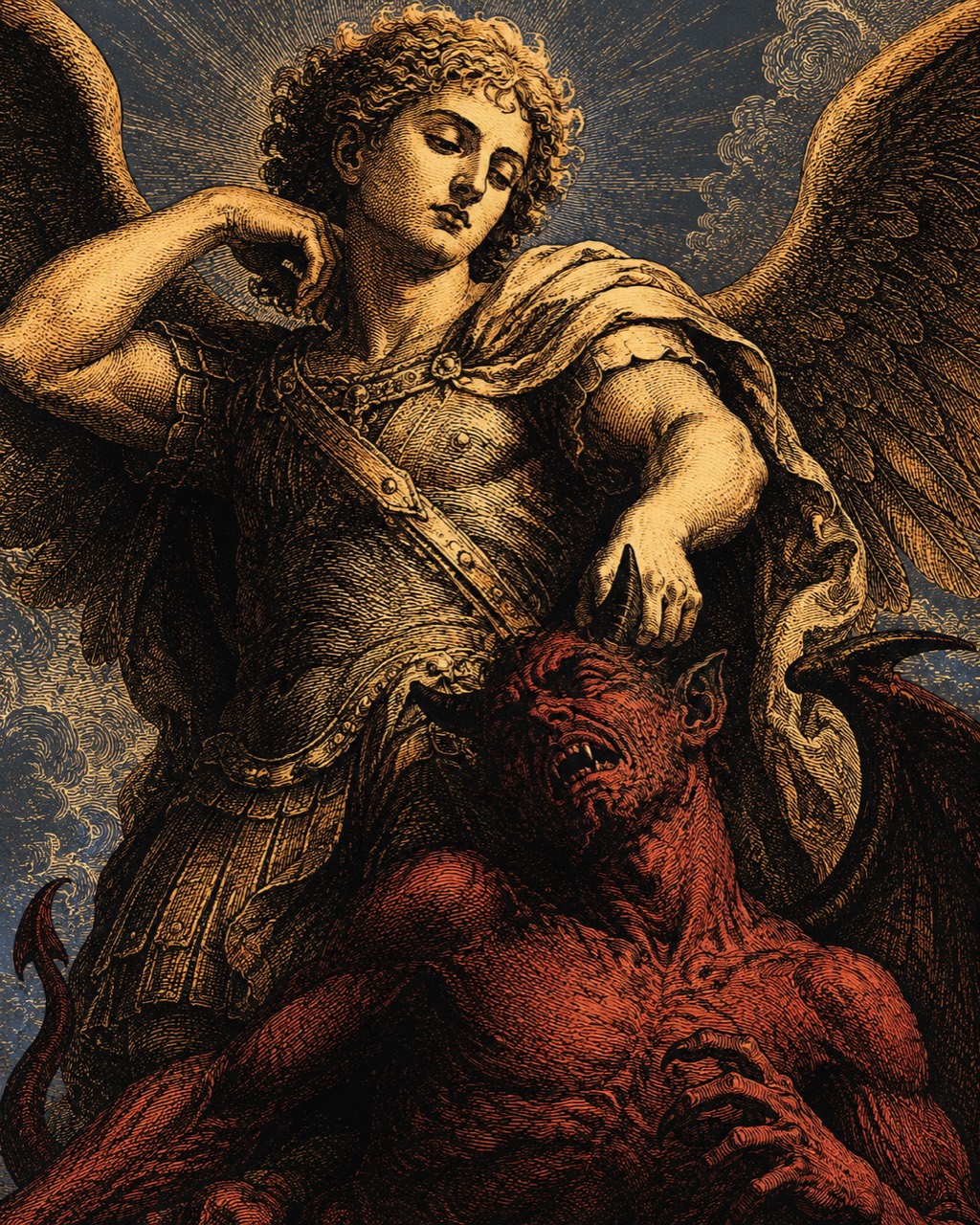
Saint Michael stands as patron of this work because he represents strength without self-worship. His question—Who is like God?—is an answer to the pride at the root of every ideology that makes man the author of truth. The dragon beneath his foot is not a mascot for hatred. It is a reminder that error is not always innocent and that spiritual combat is real.
Political thought must still reach the real world: a parish, a household, a school, a workplace, a street, a budget. Consequence disciplines abstraction. It forces moral language to answer for what it builds, permits, or destroys across Canada and North America.
The journal will grow slowly. It will prefer one necessary essay to a month of manufactured reaction. Its commitment is simple: tell the truth plainly, submit judgment to reason and faith, and do not call surrender peace.