About the journal
A publication for truth without euphemism.
The Modern Inquisition is a writer-led journal about civic life, political power, place, and the first principles beneath public argument. It is Canadian in origin and continental in ambition: addressed to anyone in North America who suspects that the reigning political settlement has exhausted both its courage and its truth.
Why the name?
Here, “inquisition” means disciplined inquiry: the refusal to let a fashionable answer pass merely because polite society has declared the question closed. It does not mean that every truth is provisional. It means that modern claims must answer to reason, reality, natural law, and the moral tradition they so often ignore.
Where it stands
The journal stands within the Catholic intellectual tradition. It accepts that truth is objective; that man possesses dignity and a fallen nature; that freedom is ordered toward the good; and that the Church speaks with real authority in matters of faith and morals. Catholic dogma will not be treated as an embarrassment to translate into the timid vocabulary of the age.
Its manner
Firmness is not cruelty, and charity is not vagueness. The journal will distinguish reporting from judgment, argue from evidence, represent serious opponents accurately, and refuse the therapeutic jargon by which moral cowardice so often passes for compassion. It will be ruthless with falsehood and exacting with itself.
Malachi Musetti
The Modern Inquisition is written and edited by Malachi Musetti. It is a personal journal rather than an institutional newsroom: one author moving between political commentary, Catholic thought, essays, and shorter notebook entries.
Radical without violence
Its radicalism is literal: a return to the root. The journal seeks a fundamental reordering of public life toward truth, worship, family, duty, and the common good. Its means are nonviolent: persuasion, conversion, disciplined association, institution building, lawful political action, and moral witness. It rejects terrorism, political violence, intimidation, and the degradation of opponents into enemies unworthy of human dignity.
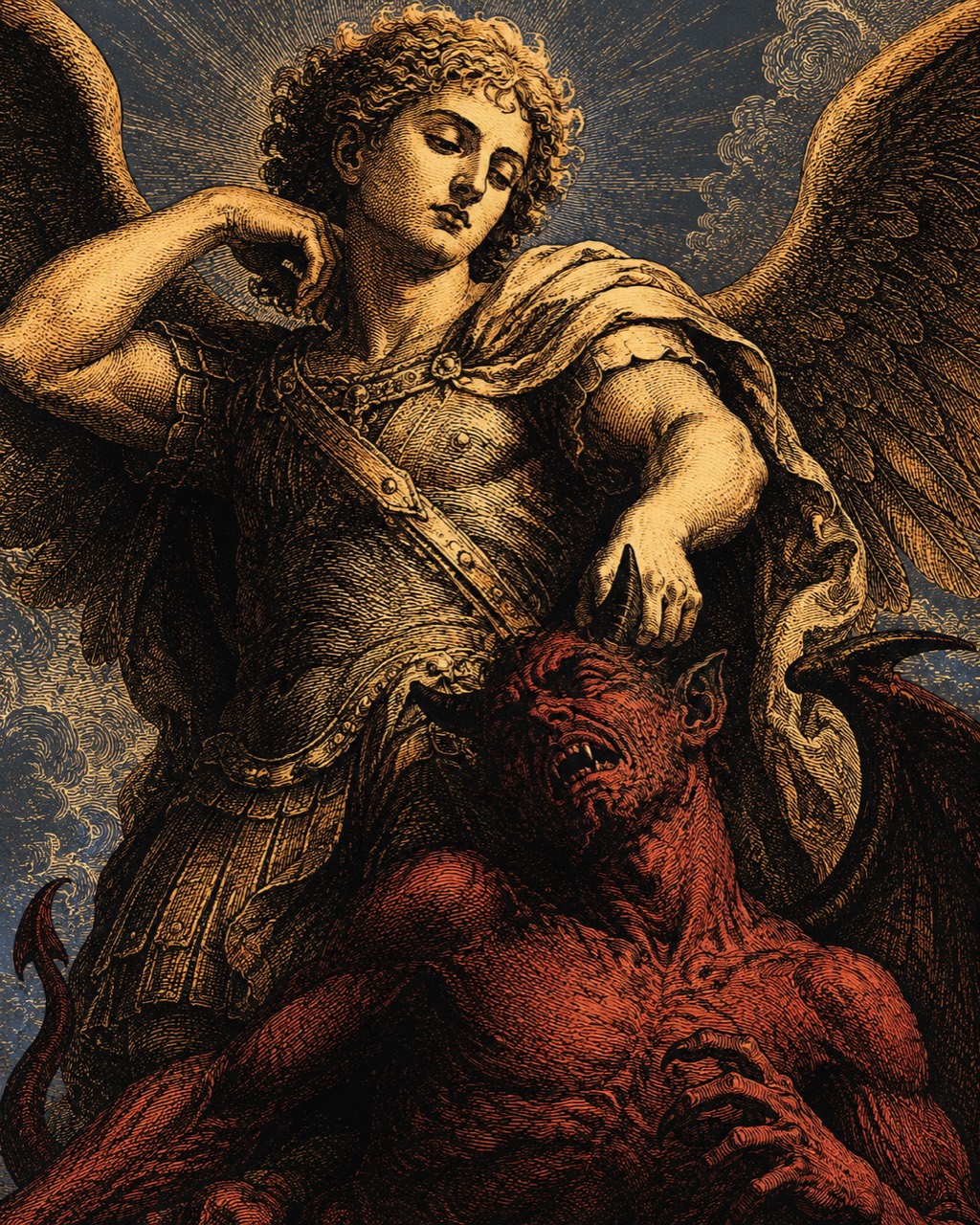
Why Saint Michael?
Saint Michael is the journal’s patron and mascot: intelligence in the service of truth, strength under authority, and victory without vanity. The dragon beneath his foot is not a political opponent. It is the older enemy—pride, deception, and the will to call evil good.
The first issue
The publication is being built in public, one essay at a time. A newsletter subscription will open when the first issue is ready; no email address is being collected before there is something worth sending.
Read the statement of intent